
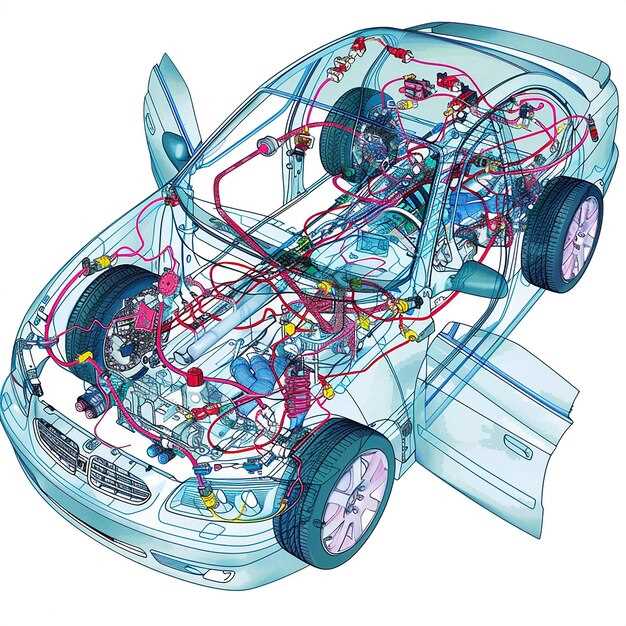
In the high-stakes world of motorsport, the quest for speed and performance drives innovation at every turn. One of the pivotal methodologies enhancing race car design is Computational Fluid Dynamics (CFD). This technology enables engineers to create intricate simulations of aerodynamics, providing crucial insights into how air interacts with various components of a vehicle. By examining airflow patterns, drag, and downforce through digital models, teams can optimize designs well before they hit the track.
The role of CFD in race car development cannot be overstated. Traditional wind tunnel testing, while still relevant, often requires substantial time and resources. In contrast, CFD allows for rapid iteration of design concepts, enabling engineers to test numerous configurations in a fraction of the time. This acceleration in the design process not only cuts costs but also fosters creativity, allowing teams to push the boundaries of what is possible in aerodynamics.
Furthermore, the accuracy of simulation tools has dramatically increased over the years, making it possible to predict performance outcomes with remarkable precision. As a result, race teams can make informed decisions based on reliable data, ultimately leading to cars that are not only faster but also more stable and responsive. The combined effects of optimized aerodynamics and effective simulation practices are setting a new standard in how race cars are designed and engineered, reflecting the ever-evolving nature of motorsport technology.
Maximizing Downforce through CFD Analysis in Race Cars

In contemporary motorsport, achieving optimal downforce is crucial for enhancing race car performance. Computational Fluid Dynamics (CFD) has revolutionized the way designers approach aerodynamics, allowing for intricate modeling and simulation of airflow over vehicle surfaces. The ability to visualize and quantify airflow patterns enables engineers to make informed decisions regarding the shape and configuration of various components, from wings to underbodies.
CFD analysis facilitates the exploration of different aerodynamic setups. By simulating various designs, engineers can identify how changes affect downforce and drag ratios. Fine-tuning elements such as wing angle, shape, and position can significantly impact the car’s ability to generate downforce without incurring excessive drag. The iterative nature of CFD allows for rapid testing and optimization, reducing the reliance on physical prototypes and wind tunnel experiments, which can be costly and time-consuming.
Race cars benefit enormously from specific CFD applications. By employing advanced simulation techniques, engineers can analyze the effects of ground effect, airflow detachment, and vortex generation around the vehicle. For instance, optimizing a rear wing’s design through CFD can lead to a substantial increase in downforce, improving cornering speeds and tire grip. Furthermore, understanding the interaction between different aerodynamic elements ensures a balanced configuration, vital for maintaining stability at high speeds.
The role of CFD extends beyond mere design adjustments. It aids in predicting the car’s performance in varying conditions, which is essential for strategic race planning. Real-time data from CFD models can inform race engineers about aerodynamic efficiency, allowing for real-time adjustments to maximize downforce during a race. This adaptability is key to gaining an edge over competitors.
In conclusion, embracing CFD for maximizing downforce in race car design is not merely an option but a necessity in modern motorsports. Its capacity to provide detailed insights into aerodynamic behavior empowers designers to create high-performance vehicles that excel on the track. As technology continues to evolve, the fusion of CFD and race car design will undoubtedly produce even more innovative solutions, pushing performance boundaries ever further.
Optimizing Drag Coefficients with Computational Fluid Dynamics
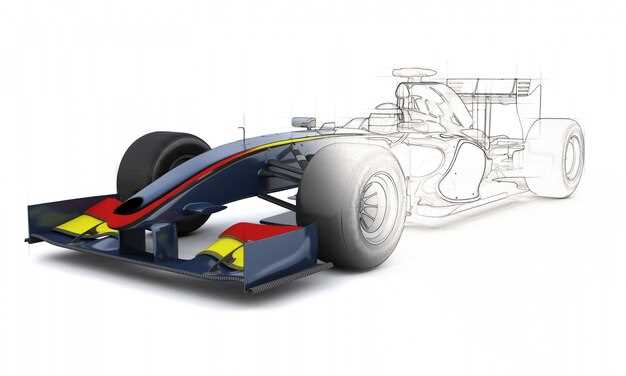
In the realm of motorsport, achieving optimal performance hinges significantly on minimizing aerodynamic drag. Computational Fluid Dynamics (CFD) serves as a critical tool to enhance the drag coefficient of race cars, enabling engineers to simulate airflow around the vehicle and make informed design decisions.
CFD simulations allow designers to visualize the complex behaviors of air as it interacts with the car’s surface. By analyzing these interactions, engineers can identify areas where drag is generated, such as turbulent flow regions and pressure differentials. This granularity in analysis helps to refine car shapes and surfaces to achieve smoother airflow, thereby reducing drag.
Through iterative CFD simulations, designers can experiment with different geometries, such as adjusting the wing angles, modifying body contours, or adding diffusers. Each iteration provides insights that guide design modifications, allowing for precise adjustments that contribute to decreased drag coefficients. The simulation process also helps evaluate the impact of environmental factors, like wind direction and speed, on car performance.
Moreover, advanced CFD techniques such as turbulence modeling and mesh refinement ensure accurate representations of airflow patterns. These high-fidelity simulations reveal subtle drag contributions that may be overlooked in simpler models or physical testing. As a result, the optimized designs derived from CFD not only improve speed but also enhance fuel efficiency and overall vehicle stability during racing conditions.
Ultimately, leveraging CFD for optimizing drag coefficients transforms race car design into a more scientific and precise endeavor. It empowers engineers to push the limits of performance and innovation, resulting in cars that are faster, more efficient, and better equipped to clinch victory on the racetrack.
Integrating CFD into the Race Car Development Workflow
The integration of Computational Fluid Dynamics (CFD) into the race car development workflow has fundamentally transformed the engineering processes used by racing teams. By utilizing advanced simulation techniques, teams can optimize aerodynamic performance at various stages of the design cycle.
Initially, CFD is employed during the conceptual phase, where preliminary shapes of the car body are analyzed. Engineers can quickly assess airflow patterns, drag, and downforce without the need for physical prototypes. This allows for rapid iterations and the exploration of multiple design variations, ensuring that only the most promising concepts proceed to further development.
As the design evolves, detailed CFD simulations are conducted on specific components such as wings, diffusers, and underbodies. These simulations provide critical insights into how each part interacts with the overall body of the car, helping to identify areas that could be improved for better performance. Through this precise analysis, engineers can make informed decisions on modifications that enhance efficiency and stability.
Moreover, the integration of CFD allows for a more seamless collaboration among different engineering disciplines. Data obtained from CFD simulations can be shared between aerodynamicists, chassis engineers, and powertrain specialists, facilitating a holistic approach to performance optimization. This collaborative environment ensures that all aspects of the car’s design work in harmony, ultimately leading to improved lap times.
Finally, the use of CFD in conjunction with wind tunnel testing results in a more robust validation process. Simulations can predict performance outcomes with a high degree of accuracy, allowing teams to refine their designs before engaging in costly physical tests. This not only saves time and resources but also enables teams to maximize their competitive edge before race day.


